
NCERT Solutions for Class 9 SST Chapter 9 The Price Puzzle: What Drives the Market
Table of Contents
The Big Questions
Question 1:
What are the factors that influence the demand for and supply of goods and services in a market?
बाजार में वस्तुओं और सेवाओं की माँग तथा पूर्ति को प्रभावित करने वाले कारक कौन-कौन से हैं?
Answer
Demand is influenced by price, income, tastes and preferences, prices of related goods, and expectations. Supply is influenced by the price of the good, input costs, technology, number of sellers, taxes and subsidies, and expectations. Natural conditions can also affect the supply of agricultural goods.
माँग को कीमत, आय, रुचि एवं पसंद, संबंधित वस्तुओं की कीमत और भविष्य की अपेक्षाएँ प्रभावित करती हैं। पूर्ति को वस्तु की कीमत, उत्पादन लागत, तकनीक, विक्रेताओं की संख्या, कर एवं सब्सिडी तथा अपेक्षाएँ प्रभावित करती हैं। प्राकृतिक परिस्थितियाँ भी कृषि वस्तुओं की पूर्ति को प्रभावित करती हैं।
Question 2:
How are prices of goods and services determined through demand and supply interactions?
माँग और पूर्ति की परस्पर क्रिया के माध्यम से वस्तुओं और सेवाओं की कीमतें कैसे निर्धारित होती हैं?
Answer
Prices are determined through the interaction of demand and supply. When demand is greater than supply, prices tend to rise. When supply is greater than demand, prices tend to fall. Buyers and sellers respond to these price changes until a price is reached at which the quantity demanded and supplied are equal.
वस्तुओं और सेवाओं की कीमतें माँग और पूर्ति की परस्पर क्रिया से निर्धारित होती हैं। जब माँग पूर्ति से अधिक होती है, तो कीमत बढ़ने की प्रवृत्ति होती है। जब पूर्ति माँग से अधिक होती है, तो कीमत घटती है। अंततः ऐसी कीमत बनती है जहाँ माँग और पूर्ति बराबर होती हैं।
Question 3:
What is market equilibrium, and does it exist in the real world?
बाजार संतुलन क्या है और क्या यह वास्तविक दुनिया में मौजूद होता है?
Answer
Market equilibrium is the situation where the quantity of a good demanded by buyers equals the quantity supplied by sellers at a particular price. It is an important theoretical concept. In the real world, markets are constantly changing due to changes in demand, supply, information and other conditions, so equilibrium may not remain fixed.
बाजार संतुलन वह स्थिति है जब किसी निश्चित कीमत पर खरीदारों द्वारा माँगी गई वस्तु की मात्रा विक्रेताओं द्वारा उपलब्ध कराई गई मात्रा के बराबर होती है। यह एक महत्वपूर्ण सैद्धांतिक अवधारणा है। वास्तविक दुनिया में माँग, पूर्ति और अन्य परिस्थितियों में लगातार बदलाव होते रहते हैं।
Question 4:
How and why does the government intervene in the market?
सरकार बाजार में कैसे और क्यों हस्तक्षेप करती है?
Answer
The government intervenes in markets to address situations where markets may not produce socially desirable outcomes. It may regulate prices, provide public goods and services, impose taxes, give subsidies, and protect consumers and producers. Such intervention aims to promote social welfare, reduce harmful effects and ensure access to essential goods and services.
सरकार बाजार में हस्तक्षेप करती है ताकि उन परिस्थितियों का समाधान किया जा सके जहाँ बाजार सामाजिक रूप से वांछित परिणाम नहीं दे पाता। सरकार कीमतों को नियंत्रित कर सकती है, सार्वजनिक वस्तुएँ उपलब्ध करा सकती है, कर लगा सकती है और सब्सिडी दे सकती है। इसका उद्देश्य सामाजिक कल्याण और आवश्यक वस्तुओं तक पहुँच सुनिश्चित करना है।
Questions and activities
Question 1:
An increase in income always leads to a rise in demand for goods. Defend or refute, giving reasons for the same.
वस्तुओं की आय में वृद्धि होने से हमेशा उनकी माँग में वृद्धि होती है। इस कथन के पक्ष या विपक्ष में तर्क देते हुए कारण बताइए।
Answer
The statement is not always true. An increase in income generally increases the demand for normal goods, such as better-quality clothes and branded products. However, the demand for inferior goods, such as cheaper substitutes, may decrease as people start buying better alternatives. Therefore, the effect of an increase in income on demand depends on the type of good and the preferences of consumers.
यह कथन हमेशा सही नहीं है। आय में वृद्धि होने पर सामान्य वस्तुओं, जैसे बेहतर गुणवत्ता वाले कपड़ों और ब्रांडेड उत्पादों की माँग सामान्यतः बढ़ जाती है। लेकिन घटिया या निम्नस्तरीय वस्तुओं, जैसे सस्ते विकल्पों की माँग कम हो सकती है, क्योंकि लोग बेहतर विकल्प खरीदने लगते हैं। इसलिए, आय में वृद्धि का माँग पर प्रभाव वस्तु के प्रकार और उपभोक्ताओं की पसंद पर निर्भर करता है।
Question 2:
If petrol prices double, what happens to
a. Demand for diesel cars
b. Demand for electric cars
c. Demand for car accessories
d. Demand for public transport
यदि पेट्रोल की कीमतें दोगुनी हो जाती हैं, तो निम्नलिखित की माँग पर क्या प्रभाव पड़ेगा?
(क) डीज़ल कारों की माँग
(ख) इलेक्ट्रिक कारों की माँग
(ग) कार के सहायक उपकरणों की माँग
(घ) सार्वजनिक परिवहन की माँग
Answer
a. Demand for diesel cars: It may increase because people may prefer diesel cars as an alternative to petrol cars.
b. Demand for electric cars: It may increase because electric cars can reduce dependence on petrol.
c. Demand for car accessories: It may remain largely unchanged because car accessories are not directly related to petrol prices.
d. Demand for public transport: It may increase because people may prefer buses and other public transport to reduce their travel expenses.
a. डीज़ल कारों की माँग: इसमें वृद्धि हो सकती है, क्योंकि लोग पेट्रोल कारों के विकल्प के रूप में डीज़ल कारें खरीदना पसंद कर सकते हैं।
b. इलेक्ट्रिक कारों की माँग: इसमें वृद्धि हो सकती है, क्योंकि इलेक्ट्रिक कारों से पेट्रोल पर निर्भरता कम हो सकती है।
c. कार के सहायक उपकरणों की माँग: इसमें सामान्यतः कोई विशेष बदलाव नहीं होगा, क्योंकि इनकी माँग का पेट्रोल की कीमतों से सीधा संबंध नहीं है।
d. सार्वजनिक परिवहन की माँग: इसमें वृद्धि हो सकती है, क्योंकि लोग यात्रा का खर्च कम करने के लिए बसों और अन्य सार्वजनिक परिवहन साधनों का उपयोग करना पसंद कर सकते हैं।
Question 3:
A farmer traditionally irrigates fields manually (labour-intensive). He installs drip irrigation (a technology upgrade) that reduces water use by 40 per cent and increases yield by 30 per cent. How does this affect
a. His cost of production
b. His willingness to supply at different prices
c. The overall market supply if many farmers adopt this technology
एक किसान परंपरागत रूप से खेतों की सिंचाई हाथ से करता है, जिसमें अधिक श्रम की आवश्यकता होती है। वह ड्रिप सिंचाई (तकनीकी सुधार) अपनाता है, जिससे पानी का उपयोग 40 प्रतिशत कम हो जाता है और उपज में 30 प्रतिशत की वृद्धि होती है। इसका निम्नलिखित पर क्या प्रभाव पड़ेगा?
(क) उसकी उत्पादन लागत पर
(ख) विभिन्न कीमतों पर उसकी पूर्ति करने की इच्छा पर
(ग) यदि कई किसान इस तकनीक को अपनाते हैं, तो बाजार की कुल पूर्ति पर
(a) Cost of production: The cost of production may decrease because drip irrigation saves water and labour. However, the initial installation cost may increase expenses.
(b) Willingness to supply at different prices: The farmer may be willing to supply more at each price because higher yield and lower operating costs make production more profitable.
(c) Overall market supply: If many farmers adopt this technology, the overall market supply will increase because production rises and resources are used more efficiently.
(क) उत्पादन लागत: पानी और श्रम की बचत होने के कारण उत्पादन लागत कम हो सकती है। हालाँकि, ड्रिप सिंचाई लगाने की शुरुआती लागत से खर्च बढ़ सकता है।
(ख) विभिन्न कीमतों पर पूर्ति करने की इच्छा: किसान प्रत्येक कीमत पर अधिक पूर्ति करने के लिए तैयार हो सकता है, क्योंकि उपज बढ़ने और परिचालन लागत कम होने से उत्पादन अधिक लाभदायक बन जाता है।
(ग) बाजार की कुल पूर्ति: यदि कई किसान इस तकनीक को अपनाते हैं, तो बाजार की कुल पूर्ति बढ़ जाएगी, क्योंकि उत्पादन में वृद्धि होगी और संसाधनों का अधिक कुशलता से उपयोग होगा।
Question 4:
During online festival sales, the prices of many products are very low. Use the concept of demand and supply to explain why the sellers sell at such a low price. What happens to the equilibrium when the price is lowered? Does this benefit only consumers or sellers as well? Explain.
ऑनलाइन त्योहारों की सेल के दौरान अनेक वस्तुओं की कीमतें बहुत कम होती हैं। माँग और पूर्ति की अवधारणा का उपयोग करके समझाइए कि विक्रेता इतनी कम कीमतों पर वस्तुएँ क्यों बेचते हैं। जब कीमत कम की जाती है, तो बाजार के संतुलन पर क्या प्रभाव पड़ता है? क्या इससे केवल उपभोक्ताओं को लाभ होता है या विक्रेताओं को भी? समझाइए।
Answer
During online festival sales, sellers reduce prices to attract more customers, increase demand, clear old stock and compete with other sellers. Lower prices make products more affordable, encouraging consumers to buy more. If the price falls below the equilibrium price, quantity demanded exceeds quantity supplied, creating a shortage. However, if lower prices attract more customers and increase sales volume, sellers may also benefit through higher total sales and faster stock clearance. Thus, festival sales can benefit both consumers and sellers.
ऑनलाइन त्योहारों की सेल के दौरान विक्रेता अधिक ग्राहकों को आकर्षित करने, माँग बढ़ाने, पुराने स्टॉक को समाप्त करने और प्रतिस्पर्धा का सामना करने के लिए कीमतें कम कर देते हैं। कम कीमतों पर वस्तुएँ अधिक किफायती हो जाती हैं, जिससे उपभोक्ता अधिक खरीदारी करने के लिए प्रोत्साहित होते हैं। यदि कीमत संतुलन कीमत से कम हो जाती है, तो माँग की मात्रा पूर्ति की मात्रा से अधिक हो जाती है और बाजार में कमी उत्पन्न होती है। हालाँकि, कम कीमतों से ग्राहकों की संख्या और बिक्री बढ़ने पर विक्रेताओं को भी लाभ हो सकता है। इस प्रकार, त्योहारों की सेल से उपभोक्ताओं और विक्रेताओं दोनों को लाभ हो सकता है।
Question 5:
Suppose the government sets a maximum sale price for an essential vaccine below the market-driven price. What is likely to happen? Choose from the options below and elucidate your point.
a. Surplus b. Shortage c. No effect d. Fall in demand
मान लीजिए कि सरकार किसी आवश्यक टीके की अधिकतम बिक्री कीमत बाजार द्वारा निर्धारित कीमत से कम तय कर देती है। ऐसी स्थिति में क्या होने की संभावना है? नीचे दिए गए विकल्पों में से सही विकल्प चुनिए और अपने उत्तर को स्पष्ट कीजिए।
(क) अधिशेष (ख) कमी (ग) कोई प्रभाव नहीं (घ) माँग में गिरावट
Answer
(b) Shortage
When the government fixes the maximum price of a vaccine below its equilibrium price, the vaccine becomes more affordable, increasing its quantity demanded. However, producers may be less willing to supply it at the lower price. As a result, quantity demanded exceeds quantity supplied, leading to a shortage in the market.
(ख) कमी (Shortage)
जब सरकार किसी टीके की अधिकतम कीमत उसकी संतुलन कीमत से कम निर्धारित करती है, तो टीका अधिक किफायती हो जाता है और उसकी माँग की मात्रा बढ़ जाती है। हालाँकि, कम कीमत मिलने के कारण उत्पादक उसकी पूर्ति कम करने के लिए इच्छुक हो सकते हैं। परिणामस्वरूप, माँग की मात्रा पूर्ति की मात्रा से अधिक हो जाती है और बाजार में टीके की कमी उत्पन्न हो जाती है।
Question 6:
The government levies higher taxes on products such as tobacco and alcohol to promote healthier choices among citizens. Can you find out other goods where price controls have been set in place? What are the reasons for the same?
सरकार नागरिकों को स्वस्थ विकल्प अपनाने के लिए प्रोत्साहित करने हेतु तंबाकू और शराब जैसी वस्तुओं पर अधिक कर लगाती है। ऐसी अन्य वस्तुओं का पता लगाइए जिनकी कीमतों पर नियंत्रण रखा गया है। इसके क्या कारण हैं?
Answer
In India, price controls have been introduced for several essential goods and services.
- Essential medicines: Their prices are regulated to make healthcare affordable and prevent excessive pricing.
- Fertilizers: The government controls or regulates prices to help farmers obtain fertilizers at affordable rates.
- Food grains: The government provides wheat and rice at subsidised prices through the Public Distribution System (PDS) to ensure food security for poorer households.
- Liquefied Petroleum Gas (LPG): Subsidies have been provided to eligible households to make cooking fuel more affordable.
- Electricity: Electricity tariffs are regulated by authorities to protect consumers and ensure a reliable supply.
The main reasons for price controls are to make essential goods affordable, protect weaker sections of society, prevent excessive prices and promote public welfare.
भारत में कई आवश्यक वस्तुओं और सेवाओं की कीमतों पर नियंत्रण रखा जाता है।
- आवश्यक दवाइयाँ: स्वास्थ्य सेवाओं को किफायती बनाने और अत्यधिक कीमतों को रोकने के लिए इनकी कीमतों को नियंत्रित किया जाता है।
- उर्वरक: किसानों को उचित कीमतों पर उर्वरक उपलब्ध कराने के लिए सरकार इनकी कीमतों को नियंत्रित करती है या इन पर सब्सिडी देती है।
- खाद्यान्न: सरकार सार्वजनिक वितरण प्रणाली (PDS) के माध्यम से गरीब परिवारों को गेहूँ और चावल रियायती कीमतों पर उपलब्ध कराती है, ताकि खाद्य सुरक्षा सुनिश्चित हो सके।
- तरलीकृत पेट्रोलियम गैस (LPG): पात्र परिवारों को रसोई गैस किफायती दरों पर उपलब्ध कराने के लिए सब्सिडी दी जाती है।
- बिजली: उपभोक्ताओं के हितों की रक्षा करने और बिजली की विश्वसनीय आपूर्ति सुनिश्चित करने के लिए संबंधित प्राधिकरण बिजली की दरों को नियंत्रित करते हैं।
मूल्य नियंत्रण का मुख्य उद्देश्य आवश्यक वस्तुओं को किफायती बनाना, समाज के कमजोर वर्गों की रक्षा करना, अत्यधिक कीमतों को रोकना और जनकल्याण को बढ़ावा देना है।
Question 7:
Can excessive government regulation hurt markets? Explain with suitable examples.
क्या सरकार द्वारा अत्यधिक नियमन बाजारों को नुकसान पहुँचा सकता है? उपयुक्त उदाहरणों सहित समझाइए।
Answer
Yes, excessive government regulation can sometimes harm markets. Too many rules and restrictions may increase production costs, discourage investment and reduce competition. For example, if the government fixes the price of a product too low, producers may reduce its supply, causing shortages. Similarly, excessive licensing requirements may discourage new businesses from entering the market. Therefore, government regulation should protect consumers and ensure fair competition without unnecessarily restricting production and trade.
हाँ, सरकार द्वारा अत्यधिक नियमन कभी-कभी बाजारों को नुकसान पहुँचा सकता है। बहुत अधिक नियम और प्रतिबंध उत्पादन लागत बढ़ा सकते हैं, निवेश को हतोत्साहित कर सकते हैं और प्रतिस्पर्धा को कम कर सकते हैं। उदाहरण के लिए, यदि सरकार किसी वस्तु की कीमत बहुत कम निर्धारित कर देती है, तो उत्पादक उसकी पूर्ति कम कर सकते हैं, जिससे बाजार में कमी उत्पन्न हो सकती है। इसी प्रकार, लाइसेंस संबंधी अत्यधिक आवश्यकताएँ नए व्यवसायों को बाजार में प्रवेश करने से हतोत्साहित कर सकती हैं। इसलिए, सरकार को उत्पादन और व्यापार पर अनावश्यक प्रतिबंध लगाए बिना उपभोक्ताओं की रक्षा तथा निष्पक्ष प्रतिस्पर्धा सुनिश्चित करनी चाहिए।
Question 8:
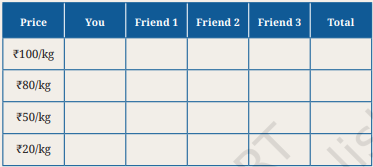
In the table below, different prices of guava are given.
a. Think and write how much guava you will buy at each price.
b. Ask the same question to three of your friends and fill in the table.
c. Also make a graph for each one of you and one final graph for the total quantity.
Answer
Question 9:
Visit the nearby vegetable market and try to find answers to the following questions.
a. Who decides the prices of different vegetables in the vegetable market?
b. Sometimes the prices of a few vegetables is too high, and sometimes too low. Why is this?
c. The price of tomatoes is high in the morning and eventually gets lower by the evening. Have you ever noticed this? Comment.
Question 10:
Categorise the following combination of goods into substitute goods and complementary goods.
a. Movie ticket in the cinema hall and popcorn
b. Eraser and pencil
c. Laptop and computer
d. Air Conditioner and cooler
e. Notebook and pen
f. Apple and banana
g. Mobile and earphones
Question 11:
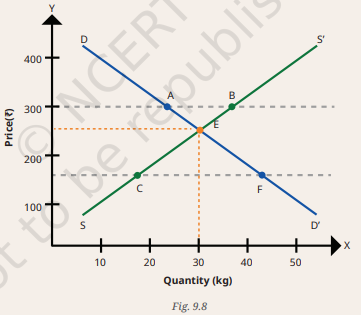
Fig. 9.8 shows the demand curve DD’ and Supply curve SS’. Based on the figure, answer the following questions:
a. What does point E represent in this market?
b. What is the equilibrium price and equilibrium quantity at point E?
c. Point A lies on DD’. Point B lies on SS’. What do the points A and B indicate about demand and supply? What does the gap between A and B (both on the upper dashed price line) represent?
d. Point F lies on DD’. Point C lies on SS’. What do the points F and C indicate about demand and supply? What does the gap between C and F (both on the lower dashed price line) represent?
e. If the price stays at the lower dashed line, what could happen next in a free market?
Question 12:
Draw a market equilibrium graph using the following demand schedule.
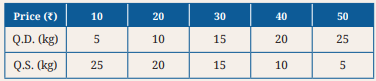
a. Plot the demand and supply curve using the above data.
b. Identify the equilibrium price and quantity.
c. Observe the above data and analyse what happens if the price is set at ₹20 or ₹40.
